Monday, December 05, 2016

questions for superman

©IJM.org
Today is a happy day for many children in the Netherlands. It is the celebration of St. Nicholas, who brings them toys and candy. It is a memory making day, a day to dream of what the evening will bring. Something you'd wish for all children. Unfortunately, there are also children who are forced to use their imagination in almost superhuman ways in order to construct their dreams.

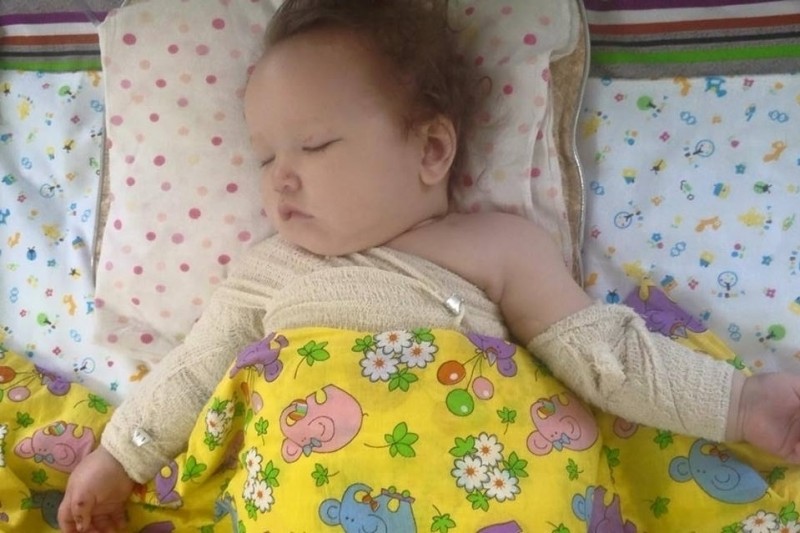
The photo links to the story of Supermaarko. (For Dutch readers, the story can be found here). It is the painful story of a 7-year-old in the Philippines, a victim of cybersex crime. A little hero who survived until help came. A hero because he tried his best to protect his little sister against bad people, when he was too small for the job.

When sharing such stories, I ask myself why I would do so. In talking about the Red Sand Project (Dutch link here, English link here), I have wondered about it's purpose: Awareness - why? What's the use?

Boys like Maarko are sold by their own parents. It is an impossible job for them to escape on their own strength. Imagine how desperate parents must be to look for such drastic measures to escape the poverty of their lives. It is because of a demand in Western countries that such 'business opportunities' can exist. That fact makes it more than a local problem and perhaps even our problem.

Awareness. Why is it a necessary ingredient to bringing justice?

There is a very simple answer. If we don't know, we will do nothing. And we can do something. We can create a positive circle of action.
International Justice Mission wants to free all slaves. It sounds like an impossible job, but the people of good will are many.

Personally, I am still getting over Maarko's question for superman: "Did you ever have to hurt the ones you loved the most?"
Is it what Maarko's mom felt she had to do? Is it what Maarko was forced to do, when he so desperately wanted to be his little sister's keeper?
It is a story of the deepest failure. It is a story of the brightest of hopes, because if hope can be restored in such darkness, then the worst of evil can be conquered. 

Maarko was abused in the cybersex industry. Now his story is used as a testimony to tell others how important it is to find boys like him. It reminds people worldwide of our collective responsibility for the children of this world. Some of them have no one who takes care of them, only people who hurt them. Those who care are not too far away to step into the story.

bubbles by Maarko through IJM,

I wrote about Liberia on this blog, a year ago in a post on bubbles:
Liberia hasn't bounced off on me like a soap bubble, I guess. The more you really meet and see people, especially those who are hurting, the more you end up a little heart-broken yourself. And I think that's a worthwhile experience.
And so it is with stories like Maarko's. They mustn't bounce off and leave us unaffected. They must leave marks on our hearts. Not just uncomfortable marks, but also prints of hope that the world can be changed. Without this hope we become indifferent, apathetic. This is the only reason that makes it worthwhile for Maarko to share his story: to involve us in freeing more children like him!

Want to get involved? Feel free to ask me how to take steps towards that! Not a career change. Just a babystep towards more hopeful stories.

Monday, November 14, 2016

how the light gets in

bringing the Red Sand Project home to share
The first Justice Conference in the Netherlands (the first even in Europe) was sold out, with 1000 people caring enough about the pursuit of justice to buy a ticket. Perhaps some bought a last minute ticket in a state of shock, having just found out that Donald Trump won the American elections. If so many people are angry today, it must be time to get together to look for the light?

Personally, I was thinking more about Leonard Cohen, by the time that I made my way to the conference. He sang: 

Forget your perfect offering

There's a crack in everything

That's how the light get in

I’ve come to cherish the cracks through the years. First, I learnt about Kintsugi, the Japanese way of repairing cracks in pottery with gold to create artistic vessels that turn out to be more valuable than the original unbroken ones. I learnt that that’s what Jesus did to my heart. Fill the scars with gold to make me more whole than I ever was. Like Cohen said, forget perfect - it gets better than that.

Sure enough, I wasn’t the only one to be thinking about Cohen. His quote ran through this weekend almost as a theme song. Gert-Jan Segers ended his speech with it, just before kicking off the Red Sand Project. Which brings me to the next thing I learnt about filling cracks.

MollyGochman is the creator of this Red Sand Project, a participatory art project that allows ordinary people like you and me to speak out for freedom and against modern-day slavery. She uses cracks in the pavement to represent the cracks in society, where we lose people through human trafficking.

Especially vulnerable are the poorest boys and girls, unschooled adults, refugees and all those who've already had a false start in life. Passed by and stepped over by society, they turn to those who are eager to 'help': human traffickers, smugglers, corrupted businessmen, slave owners, pimps.

International Justice Mission looks for these people. 46 million modern-day slaves, many in countries with laws against slavery, but little law enforcement. IJM seeks to free them and help local authorities enforce the law. Once they are free, victims are placed in a rehabilitation program, where they learn to make a living in a way that allows them to be free and dignified people once again.


Etsy
So on Saturday IJM launched the Red Sand Project in The Netherlands, bringing people like you and me a creative way to spread awareness of modern-day slavery. You don’t have to know about art to join. It’s very simple. Just find a crack in the pavement and fill it with red sand, take a picture and post it on social media with #RedSandProject and @IJMnl .

You can find out here how to get your bag of special red sand. And you know, this might just be the start of you bringing Kintsugi to the heart of a little girl in India, who needs to know she is not alone.


Tuesday, October 18, 2016

and the award goes to...

Something must be going well in my country when the Dutch equivalent of an Emmy gets awarded to Floortje Dessing (remember, I once mentioned her program in another blogpost?) for showing us her travels to the most remote parts of the world. She deserves it!

She traveled to Syria before and after (or rather during) the war and her footage is full of contradictions: 
The beautiful centre of Damascus, with a night life, luxurious weddings and a flourishing Dutch chocolate shop. All of that existing alongside entire neighborhoods bombed to shreds, ghost towns, refugees staying in the pretty park in the centre and the sounds of artillery.


Floortje Dessing returns to Syria


Reminders that it must be an impossible situation for the Syrians. Come to Europe and get judged for fleeing. Stay, get used to the sounds of war and live life to the fullest despite all; you'll risk the judgment of those living in safe countries either way.

These kind of programs make me rethink the way I look at the World and other people. And the way I look at my own judgments. Go gentle on others, because you don't know how you would respond in their place.

Floortje mentioned Jeroen Oerlemans in her speech after receiving her award; how people like him deserve Emmy's. On the day that she had her glory moment, this photographer had his funeral. 

Jeroen Oerlemans was killed by an IS sniper in Libya on Sunday the 2nd of October. He didn't mean to get himself killed of course. Like Floortje, he admitted to being afraid of going into war situations. He meant to get us another story, because that was his job. He considered every risk he took, was careful and tried not to do anything stupid. He was brave enough to cover front-page news, or even the ethical dilemma's behind the news, showing the insanity of his own profession (below, the story is in Lebanon after an Israeli air strike in 2006 and World Press awarded him for the photo in 2007).

Honorable Mention Prize, World Press

I'm thankful there are people in my world, who bring me other worlds. They deserve honorable mention, so I like to mention them here. They inspire. I congratulate Floortje Dessing. And I salute Jeroen Oerlemans and thank his family and friends who supported him on unlikely journeys.

Monday, September 05, 2016

look twice, think twice

It has been said that these are times when the speediness of our response is more important than listening, reading, thinking, processing and formulating a suitable answer.

This image made me stop in my tracks and look again...and again...and consider... What did the artist mean? Which image came first? Is it a trick, a joke, or is there a deeper layer still?

work of an unknown fotographer,
the idea of a portrait front on and in profile is of Erwin Blumenfeld
(source: Pinterest)

I love that it made me linger.

Things aren't what they seem. A quick response is risky in many situations. The danger of misunderstanding being that you may respond with words to be regretted.
Another risk of going too fast, is missing out. On beauty.

What I love in art is that sometimes you just don't understand. You know something worthy is being said, sung, drawn or portrayed. Something worthy of your attention. Something perhaps too wonderful to fully grasp. Mystery.

Every human being is such a piece of art. Abraham Lincoln once said: 
"I don't like that man. I'll have to get to know him better."
The humanist believes all men essentially have good intentions. The Christian believes all men have something of God hidden inside them. 
What if we found time to look for that good in one another?

Mother Theresa was declared a saint this weekend. Immediately media challenge whether she's worthy of such a title. Apparently she wasn't all good. Poor woman. She probably knew better than anyone that she was a struggling human being. She didn't ask to be worshiped. The criticism on her is the opposite of what I'm advocating here. We find someone admirable and immediately look for proof that they were flawed, so we can justify ourselves. What if we were slower to judge and more eager to see heroism in ordinary people?

I don't know if anyone should be called a saint. Such post-mortem pressure on a person! And I don't think their mistakes should prevent us from having a look at their qualities or from heeding their good advice.

Every person deserves to be seen from more than one perspective.


Wednesday, August 31, 2016

remembering the Olympics in Rio

Goodbye, Rio. We've seen it once again: Brazilians know how to throw a good party. You spent a lot less money on opening and closing ceremonies than London, but your moves and looks more than make up for it. :)


I know it's easy for me to enjoy watching. I don't live in a favela. The price for Brasil to host the Olympic Games is too high for many people. Why do the Olympics so often go to countries that have bigger problems than creating an unforgettable sport's experience? The advantage of the World looking in their general direction, can hardly make up for the harm caused to locals who were brutally cleared out of their own territory to make room for guests. Neither can the smaller size of the Olympic cauldron, which was supposed to be a warning against global warming.

So many reminders, but I'm afraid the residents of Rio's slums will soon be forgotten now that the Games are over. How to thank them for sharing their city with all of us?

"Favela Morro do Cantagalo," by Baldemar Fierro of Laguna Beach, featured at the Festival of Arts
On a positive note, the World's sporters will be with us, to remind us of winning attitudes. Not just those who carry medals home.

Some of my highlights:

1. Churandy Martina ran to become 5th in the 200m Men's Final - he said with his usual big smile showing all his teeth: "I hope people who set their alarmclock to watch aren't too disappointed. I did my very best."

2. Gymnast Epke Zonderland finishing his exercise on the high bar after falling so painfully that all of Holland felt it (and he even passed out for a moment). His calm, composed commenting on it afterwards, proved him a hero too. One journalist asked him to respond to the British contestant who had appeared to be laughing at him after his fall. Zonderland said without any inclination to take offense: "You never know why someone is laughing. Perhaps he once fell off too and his coach made a comment about it to remind him."

So there, you don't have to bring home gold to be a winner!

Thursday, July 14, 2016

first times here and there


It was a great day for train travel. Some drizzly moments, not too cold, not too hot, glimpses of the sun as I waited at the station. A boy of about six was jumping around the platform with anticipation, exclaiming to passers-by: "I'm doing this for the first time in my life today!"

Oh joy, to jump on a train for the very first time! This kid was celebrating the extraordinary ordinary, giving my morning a magical twist and making me look forward to other encounters.

So on my way home, after my obligatory appointment at an exam center, I decided to go exploring. I wondered into De Nieuwe Kerk in Amsterdam, where World Press Photo 16 was being exhibited. It includes short films, one of the winners being Fatima's Drawings by Magnus Wennman from Sweden. 

Fatima tells the story of being on a refugee boat after fleeing Syria. There was a woman who gave birth to a stillborn child in the boat. Fatima saw two men throw the baby into the sea:
"It was the first time I saw something like that."
With that comment on a 'first time' I was flung back in time a few hours to the boy at the railway station. 

Such contrast: 
Fatima was about the same age as this Dutch boy, but her soul seemed so much older. His bubbly excitement set out against her solemn story telling.
His first time to take the train (my wish for any child to go on such an adventure) versus her first time to see a dead baby being thrown overboard (nobody should see that, let alone a small child!). 

What would the drawings of this Dutch boy's journey look like next to Fatima's? Perhaps the contrast there will fade again and she will draw swings without bombs....and Swedish trains.


FATIMA’S DRAWINGS from Magnus Wennman on Vimeo.

Tuesday, June 28, 2016

ways to get a multi-colored heart

Imagine being a teenager in a community of close to 200 people, from about 35 different countries, sailing around the world. Like growing up in a little separate world within the World. I'm sure those years have impacted my life! Some would say I grew up in a protected environment, because I did not face high school peer pressure for many years. True, I was spared some of the 'average' teenage struggles, although there were other challenges.

I must have been about thirteen when an Indonesian man called Joy asked me: "What do you want to be when you grow up?"
I answered that I wanted to help people in the Third World.
"Don't call them that," Joy said and most of his explanation after that must have been over my head, but it did land in my heart.

Did he go on to explain to me the Cold War origins of the expression? Did he lay out his feelings on the subject? I don't recall his exact arguments, but I've avoided the use of the phrase ever since. As a teen I understood that no one wants to come in third place like that.

Were we all equal in this multi-national community? I like to think that we were. In many ways, nationality didn't matter in this place I called home. Neither did it matter what you had studied or what your job had been before joining the ship, or what the denomination of your church on shore was. People became friends, because they simply liked each other, while not necessarily having a whole lot in common in their home countries.

There were differences too. While I used my pocket money to buy ice cream or souvenirs, my Sudanese friend used his to support his family back home. There was that kind of inequality even in our tight community: The belief among the Westerners that we NEED ice cream from time to time, especially if it's hot weather, while we had friends who worried if their family got their daily bread.
(Sidenote, on complications with sharing good stuff: One guy put his ice cream in the microwave, because he really couldn't stand the cold!)

In certain countries, some of my friends would not be allowed to leave the port area. Visa issues would cause them to be 'grounded' because of their passport nationality. Whenever this happened it hurt a little, not just for them, but also for me. Why was my friend, who really had a great personality, refused by the country we were visiting while I was welcomed? It gave me a lot to think about.

We went on a school outing to a slavery museum in the Caribbean. I paid special attention to the number of slaves the Dutch had brought over in ships, where people were packed like sardines and treated worse than that. I came to realize that my ancestors with their 'VOC mentality' had an embarrassingly large part in this.

I grew aware of the color of my skin, while having many encounters that colored my sentiments. With every experience my heart got colored stripes on it.

Perhaps my childhood was too protected, but at least growing up like this made me love the exchange of cultures. It saddens me that many Brits have voted out of the EU, because immigration terrifies them. It worries me that many Dutch citizens, once known for their tolerance, are not so open-minded in light of the current refugee crisis.

How cheering that many people who do get to know someone from a different culture, actually enjoy making new friends. Will you look someone in the eyes long enough, to let them paint your heart a little?

For more inspiration, watch the Amnesty experiment "Looking Refugees in the Eyes":

Friday, May 06, 2016

what if you really need a miracle?

Nothing more distressing than a small child fighting for his life in a hospital. Except for a small child fighting for his life in a hospital where there aren't all the means to give him the best chance to win the fight.

That's why 7-month-old Zachary has been flown to the States, after struggling for about two weeks in Mongolia to be stable enough to be brought over. He has 3rd degree burns from pulling boiling hot water all over himself. A mother's worst nightmare!

Operation Baby Zachary on Gofundme.com*
He is Hannah's baby and Hannah is one of the childhood friends who has earnt my utmost respect over the years. She seems to have never changed since we were little kids playing together. She was like a miniature mom back then, looking after her siblings in a gentle and quiet way. In my memory there's a little brother or sister perched on her hip almost all the time. Growing up we lived in different countries, and so did her siblings who have outgrown the spot on her hip. Her own children have claimed that position, but she seems not to have changed at all.

Hannah spent time working in a Mongolian orphanage at the time when she got to know her husband. I smile as I try to imagine how it went when she got engaged: "Yes, I'd love to marry you, but can we adopt these two little brothers from the orphanage I've been working at?"

And so she started married life with two children to look after, followed about a year later by a new baby. I think her heart would've been a bit too big to start with just the one child. Some years later, Zachary is her fifth and she's on a journey with him to fight for his life, whilst having to miss the other little ones who are staying behind in Mongolia.


When this happened to Zachary, I knew it was a greater disaster than if this would happen to a child in my country for two reasons:
1. Health care in Mongolia would not be up to standard, so what if Zachary would be needing prolonged treatment?
2. Health Insurance would not be anything like what we have in Holland, so how would his parents be able to afford such medical treatment?

Hannah and her husband work for an alcoholics rehab program in a remote part of Mongolia. Their own children are not the only ones in their care. Their work, attitude and modest way of life, demonstrate their faith in a loving God. What does that mean when disaster hits their own family and they themselves need to be cared for?
at the hospital in Ulaanbaatar, Mongolia *
Many people joined them in praying for a miracle. I was half expecting God to just swipe over Zachary's burns and heal them overnight. The miracle came. Parts of Zachary's skin had been so severely burnt that they seemed dead and unable to heal. Skin grafting would be needed all over. While a start with this was made, parts of the skin on his chest were coming to life and no longer in need of grafting!

On the other hand, there was no divine sweeping away of all his wounds and there is still a lot of pain everytime Zachary's bandages have to be renewed. One of the skin grafts that were done on his legs has become a septic wound instead of a success. His physical condition is very fragile and he is still in danger of going into shock again, which would be life-threatening.

The situation is frightening, yet I am confident that God is in it. I know some of my readers will think I'm delusional. If a loving God is there and has the opportunity to prove Himself, why wouldn't He provide a complete overnight miracle?

But then there is Hannah, the little boy's mother, being a miracle all on her own. Hannah prayed for smiles and happy dreams for her son and instead of crying all the time, he did begin to smile even in his sleep. She keeps describing their journey in such beautiful words and courageously holding on to the thought that God loves them. I have no right to any doubt, if she's still going strong now.

I believe that God designed for human beings to care for one another. These past days I've seen friends worldwide join in prayer and put together their resources, ideas and contacts to help Zachary. Over ten thousand U.S. Dollars were collected in a day to help cover medical expenses (by now the amount gathered on gofundme.com is more than $30,000 and that does not include the money collected by his auntie through PayPal). That too is a miracle and a testimony of how love works.
I know much more is needed, as all the costs of his treatment in the U.S. will have to be covered. This is only the beginning of a long story, which is hopeful and shaky at the same time.

God could do it all by Himself, but perhaps He chose this other design: For us to be part of each other's lives, to be part of each other's miracles. It is our awesome privilege to be allowed to chip in and help carry each other's burdens.


*Photos are Hannah's. Posted with permission. 

Monday, April 04, 2016

how to make room for fear

"Terrorism strikes again" by Algerian cartoonist Ali Dilem
Someone wrote "je suis Charlie" ("I am Charlie") on a piece of cardboard and triggered a huge respons after the attack on Charlie Hebdo. What did everyone mean? Was it an expression of hurt and sorrow, an effort to be united, or to silence fears that arose from this attack? Did it mean "Charlie, I'd take a bullet for you!"?

Then came Paris and more plaques were made. Now slowly some of us are discovering that terrorism is all over the place. In the cartoon by Dilem, the new guy is saying: "Can you make some room for me?"
It shows how many fellow sufferers are excluded by the sign-makers.

It is awesome when people make an effort to speak out in unity against evil, but the danger of speaking out like that amidst strong emotions is that we get the opposite effect. If I paint my facebook profile in the colors of the Belgian flag after the attacks in Brussels, what am I communicating about my feelings towards Turkey, Ivory Coast, Iraq or Somalia when they are struck (yes, also this same year) and I don't even now what their flag looks like?

We only seem to see what hits close to home and I think it demonstrates fear more than anything else. The question that has been put to authorities often is: "How will you guarantee our safety?"
Well, they will not. No one will be able to guarantee your safety 100%. There will always be a risk for the living, which is that they may get hurt at some point.

This leaves one solution to fear and that is bravery. Fear is not the problem and there's no need to be so frantic about ISIS realizing that they scare us. Brave people know fear. Even Jesus was sweating it out in the garden of Gethsemane before being arrested. Brave people move ahead anyway.

When brave people move ahead it is with courage, in spite of fear, and with the conviction that they are standing up for something of great importance. Often it is a certain form of freedom. This may be freedom of speech, but for that to be so important, you must have something to say. What are you willing to speak out for? Is your speech edifying? Does it bring war or peace into the hearts of those who hear it?

Remember the courage of Gandhi? He fought for freedom, but he did it in a peace loving way, refusing to use violence in his fight. He did it thinking about what was necessary in the long run, not in the spur of the moment or led by the emotions of the day. His safety was never guaranteed and he did pay a dear price, but we do remember him to this day.

What values of yours are challenged today? Are you willing to defend them and willing to think about how to best do that? Are you willing to ponder the future effects of your actions? If this time and age appears frightening to you, are you willing to keep moving ahead to find your courage?

Sunday, March 20, 2016

one meal on the International Day of Happiness

Today is the International Day of Happiness. How about that? Have you celebrated your happiness today? Have you stopped to notice reasons for happiness today?

I came back from Liberia a few days ago and in this week I have read two articles by Nicholas Kristof. He writes about subjects close to my heart. The first article was: South Sudan: Where the soldiers are scarier than crocodiles
Lynsey Addario for The New York Times Magazine - 
awesome photo which I 'borrowed' from Kristof's article on South Sudan

I read up on Sudan and South Sudan from time to time and think: "O God, that is still going on!" I'm reminded to not forget those people. They occupy a corner of my heart. A good reason to be happy is that I have never had to run for my life among crocodiles! Then again, a reason to be sad is that to this day, little boys and girls are hiding from soldiers in dangerous swamps.

The second article was: The World's Modern-Day Lepers: Women with fistulas 

I wrote about fistula 10 years ago, when I was doing the final piece for my midwifery course. And yes, that is still going on too. Women are still dying while giving birth, but on a positive note; things are improving. In Liberia there are visible changes in the healthcare system, especially since the end of the ebola crisis. There is health inspection and a phone number available for advice on whether or not to refer someone to a larger hospital. There are ambulances, so she might not have to go on motorcycle. Women are discouraged from attempting home births and encouraged to seek medical attention during pregnancy. All good developments and all reasons for joy.

But let's face it, if I count my reasons for happiness, it's easy to beat the average Liberian woman. In Liberia I noticed people think that I'm from a land that is equal to heaven. There are people who sincerely believe that white people don't get sick and that it's very unlikely for a white person to die. To some extend, they are right. I have tried to explain to some Liberian friends, that people in my country face serious problems. Looking back on such a discussion, I wondered about the truth of my statements.

It is the Lenten season, the time before Easter when some Christians choose to fast in one way or another. Perhaps they will skip a meal, or turn vegetarian for a while. It is a choice to take time for self-reflection, moderation and repentance, while commemorating the sacrifice of Christ. How would a Liberian take part? Most of my co-workers at the clinic in Rivercess never have a meal before going to work. Sometimes I find some of them a bit slow or even lazy, until I realise they haven't had breakfast! They eat one meal a day.

Then I visit a remote village and they give me a rooster. They will cook a meal that includes a little chicken and a little fish. They'll sit around and watch me eat this feast, while I notice the lack of vegetables in the sauce. If this is their feast and their average meal is much less nutritious, then no wonder I see malnourished children at clinic. They get one meal of dry rice a day! How will they celebrate the International Day of Happiness?

What is such a day about anyway? I looked it up and found the following statement on www.dayofhappiness.net:
This campaign is a global celebration to mark the United Nations International Day of Happiness. It is coordinated by Action for Happiness, a non-profit movement of people from 160 countries, supported by a partnership of like-minded organisations. A profound shift in attitudes is underway all over the world. People are now recognising that 'progress' should be about increasing human happiness and wellbeing, not just growing the economy.March 20 has been established as the annual International Day of Happiness and all 193 United Nations member states have adopted a resolution calling for happiness to be given greater priority.
Then on www.actionforhappiness.org  I find the keys for individuals who want to be part of this movement:

Sounds a little too simple? Well, for those of us who can eat three meals a day, it can be simple. It is in the first place about giving. Knowing that there is enough to go round and I can share. Before the lack of crocodiles and before the abundance of food and healthcare, there is one huge reason for being happy: I have freedom to share, both my wealth and my opinion.

Perhaps some of you reading this face serious problems. Even if that is the case, I really believe you will feel a little more happy today if you share what good things you do have. Will you try?